
- Best for
- Every level, with the right day and school
- Break
- Exposed beach break, north/central/south peaks
- Lifeguards
- RNLI daily 10am–6pm, Apr–Nov (check dates)
- Dogs
- Allowed (no council restriction listed)
- Parking
- Car parks at both ends
- Schools
- Six listed on Surfbooker
Cornwall beach guide
Fistral at a glance
Fistral is a straight sandy beach about 750 metres long, half a mile west of Newquay town centre. It fills Fistral Bay between Towan Head to the north and Pentire Point East to the south, faces west-northwest into the Atlantic and is backed by steep dunes. The Headland Hotel, built in 1897, looks down from Towan Head, and the name is thought to come from a Cornish word for foul water.
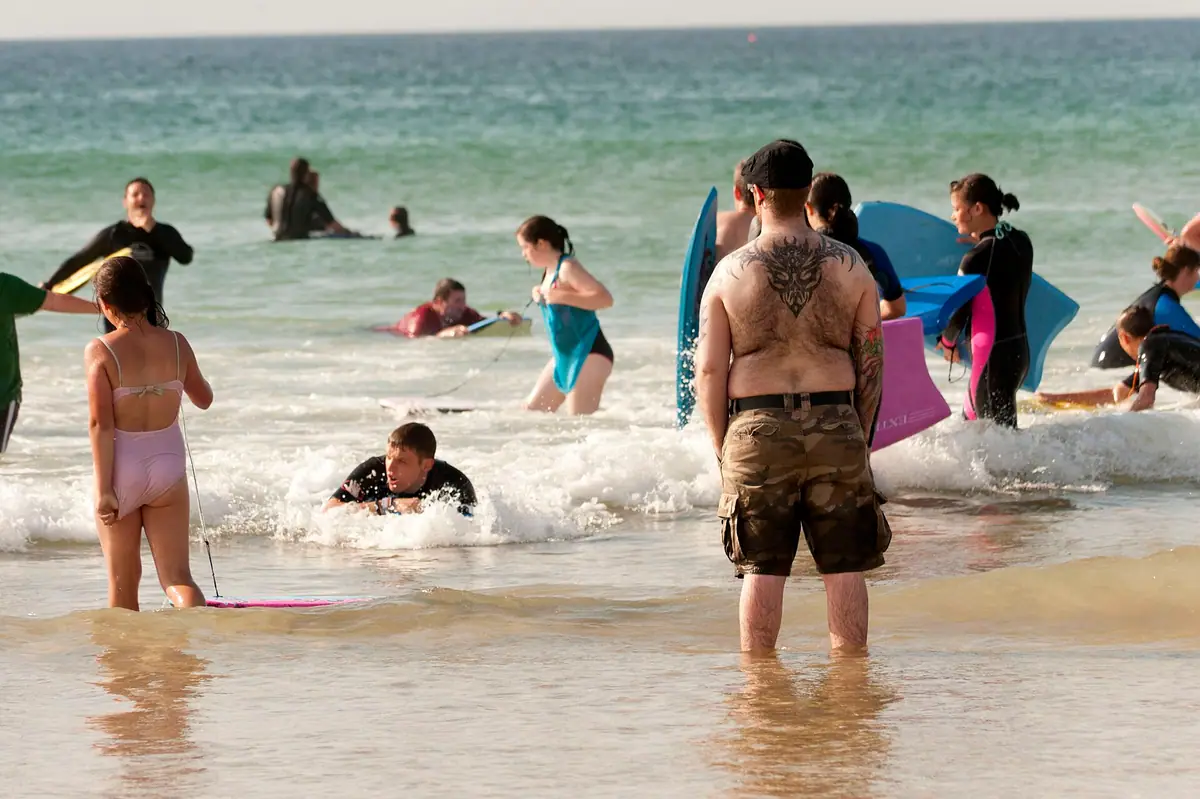
It's the home of British surfing in many ways. Major international contests have been held here, and the British Surfing Association, Newquay Surf Life Saving Club and Newquay Boardriders are all based at the beach. North Fistral has a competition building and a surf museum, and surf shops, hire, toilets and food cluster around the beach complex. On summer days and event weekends, expect a crowd in the water and on the sand.
Fistral is exposed, which is why it's so consistent and also why it needs respect. The north end is a challenging stretch of water, while the south end, tucked behind Pentire, is usually mellower. Rips run along the rocks, and the RNLI has reported large rescues from rip currents here. The RNLI patrols for a long season, so surf and swim inside the flags and take advice from the lifeguards.
Surf guide
Surfing Fistral
Fistral is a sand-bottomed beach break with shifting peaks, and because it faces the open Atlantic it's one of the most consistent spots in the UK. Easterly to south-easterly winds are offshore. North Fistral is mostly rights and is the busiest, most intense part of the beach. The middle has peaks going both ways, and South Fistral, sheltered by the Pentire headland, is usually the best bet for beginners.
At the north end, Little Fistral is a wedgy, reef-like wave over rocks that is not for inexperienced surfers, especially as the tide floods. Beyond it, the Cribbar is a reef off Towan Head that only breaks on big swells and is known as Cornwall's big-wave spot. The banks move, so the best peak changes from week to week. Ask the lifeguards or your instructor where to go.
All levels, in the right place
South Fistral is usually best for beginners; the north end is for confident surfers. Stay in the lesson area on bigger days.
Rips and rocks
Rips run along the rocks at the ends of the beach, and the rising tide can catch people out around the south-end rock pools.
Long RNLI season
The RNLI listed daily 10am–6pm cover from 3 April to 1 November for 2026. Surf between the black and white flags. Check this year's dates.
Learn & hire
Surf lessons and hire at Fistral
Fistral Beach Surf School
Teaches at Fistral Beach, Newquay.
Compare lessonsQuiksilver Surf School Newquay
Teaches at South Fistral, Newquay.
Compare lessonsNewquay Activity Centre
Teaches at Fistral Beach and Great Western Beach, Newquay.
Compare lessonsCornish Wave
Teaches at Towan Beach and Fistral Beach, Newquay.
Compare lessonsSurf Sanctuary
Teaches at Fistral Beach, Newquay.
Compare lessonsCornwall Surfing Academy
Teaches at Holywell Bay and Fistral Beach, Cornwall.
Compare lessonsFistral Beach Surf School & Hire Surf Hire
Equipment, published prices and where to collect — see the full hire profile.
See hire detailsSurf schools marked 'Listed on Surfbooker' have profiles on this site with lesson formats and current-price guidance; Surfbooker passes enquiries on but has not reviewed them in person.
Parking, facilities & safety
Know before you go
Pick the right end
The main Fistral beach car park serves the north end, with sloping sandy access to the beach. For the south end, use the Atlantic Road or Pentire Headland car parks and walk. Check where your school meets before you park.
Dune paths and steps
Paths through the dunes are sandy and unpaved, so keep to the marked routes to protect them. There are steep steps down at the south end.
Toilets at both ends
Public toilets at the north and south ends, plus surf shops, hire and food around the beach complex at North Fistral.
Allowed all year
Fistral isn't in Cornwall Council's restrictions table, so dogs are allowed year-round. Keep them under control and check signs on the day.
Newquay station
Newquay is the end of the Atlantic Coast Line from Par. Fistral is about a 20-minute walk from the station across town.
Accommodation
Where to stay near Fistral
Fistral side of Newquay
Hotels and apartments above the beach, including the Headland Hotel on Towan Head.
Central Newquay
A ten-minute walk, with the most choice.
On Surfbooker
The Headland Hotel and Spa
The Headland is a large hotel and spa on the headland right beside Fistral Beach, about half a mile from Newquay town centre. Alongside hotel rooms it.
View accommodationFistral Beach Hotel and Spa
Fistral Beach Hotel and Spa is an adults-only hotel a couple of minutes' walk from Fistral Beach in Newquay, with the town centre about 15 minutes away on.
View accommodationThe Esplanade Hotel
The Esplanade is a family-oriented hotel looking straight over Fistral Beach in Newquay, a few minutes' walk from the sand. It has couples and family.
View accommodationAtlantic Hotel Newquay
The Atlantic Hotel stands in central Newquay with views over Newquay Bay and the harbour. Alongside a range of hotel rooms, including family rooms and.
View accommodationPentire Hotel
View accommodationThe Lewinnick Lodge (rooms)
Lewinnick Lodge is a restaurant with rooms on the clifftop at Pentire headland, just outside Newquay. Rooms range from doubles to oceanside superiors and.
View accommodationThe Fort Inn (rooms)
View accommodationNewquay Beach Hotel
View accommodationSurfbooker only marks a stay as reviewed when we have stayed there ourselves. Other listings are researched or owner-supplied; check rates, board storage and cancellation terms directly.
Beyond the surf
Things to do around Fistral
Towan Head
Walk to the Huer's Hut and the headland for views over Fistral.
Blue Reef Aquarium and Newquay Zoo
Rainy-day options in town.
Travel
Getting to Fistral
Newquay station
Newquay has a branch-line station from Par; Fistral is about a 20-minute walk.
Newquay Airport
About 15 minutes' drive.
Worth the short drive
Nearby beaches and places
FAQs
Fistral: quick answers
Is Fistral good for beginners?
Yes on smaller days with a school, and usually at the south end, which is sheltered by the Pentire headland. The north end is a challenging stretch of water and best left to experienced surfers.
When are lifeguards on Fistral?
The RNLI listed daily 10am–6pm cover from 3 April to 1 November for 2026. Dates can change, so check this year's before you go.
What is the Cribbar?
A reef off Towan Head at the north end of Fistral that only breaks on big swells. It's known as Cornwall's big-wave spot and is strictly for experts.
Where should I park for Fistral?
The main Fistral car park is at the north end. For the south end, the Atlantic Road and Pentire Headland car parks are closer. Match your car park to where your lesson meets.
Sources
How we checked this guide
Surfbooker desk research, checked October 2026. This guide is based on official and operator sources listed below, not on a personal visit. Parking charges, lifeguard dates, dog rules and opening times change — always check the latest information before you travel.
- RNLI — Fistral Beach
- Wikipedia — Fistral Beach
- South West Coast Path — Newquay and Fistral from Crantock walk
- Newquay Activity Centre — Fistral Beach guide
- The Surf Atlas — Newquay surf
- Cornwall Council — dogs on beaches (restrictions table)
- Wikipedia — Newquay railway station
- RNLI — find a lifeguarded beach
Photo: Bryan Ledgard, CC BY 2.0, via Wikimedia Commons. All image credits.