
- Best for
- Lessons, families, dog walkers
- Break
- West-facing beach break by an estuary
- Lifeguards
- Seasonal
- Dogs
- Welcome all year under control (National Trust)
- Parking
- National Trust car park, 2.1 m height barrier
- Hazard
- The Gannel estuary
Cornwall beach guide
Crantock at a glance
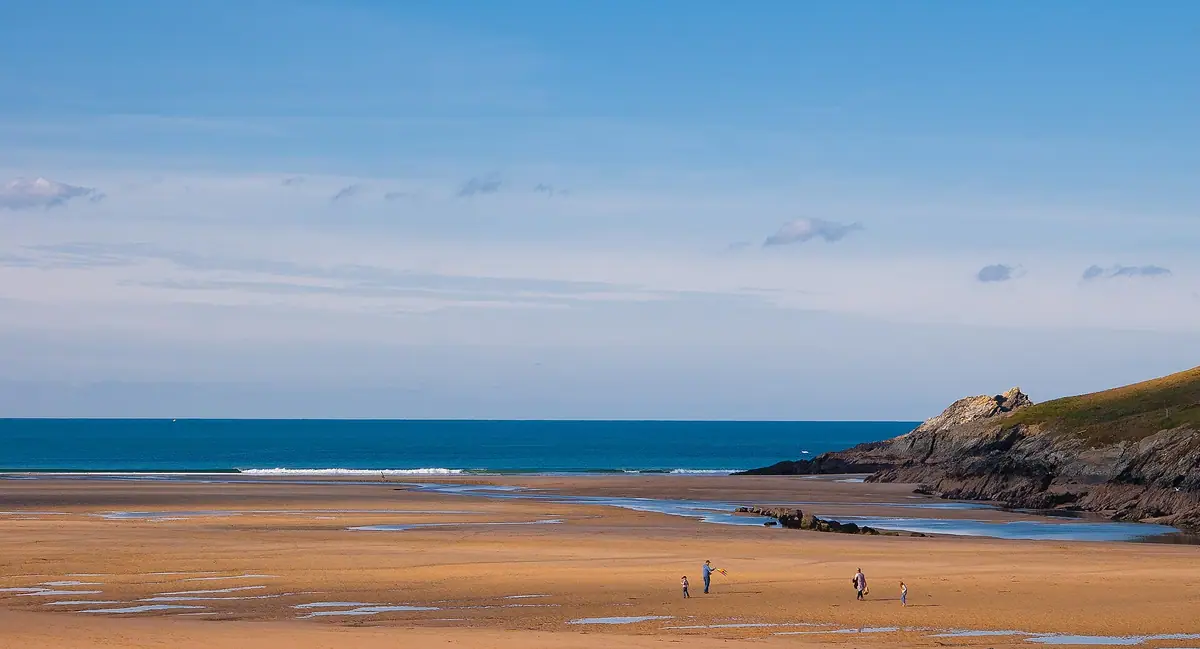
Crantock is a wide stretch of golden sand owned by the National Trust, sitting just across the Gannel estuary from Newquay's Pentire Point East. Behind it are tall, constantly shifting dunes and the grassy plateau of Rushy Green, and to the south the beach runs out towards the West Pentire headland. It's only a short hop from Newquay, but with no town on the beach it feels far more open and wild.
The Gannel has a long working history. Ships used its mouth until the late 1800s, carrying cargo to and from creeks like Penpol, where you can still see old quays, steps and mooring rings at low tide. Over on the west side of the beach, Piper's Hole is a deep cleft where fulmars nest, and at low tide a cave holds carvings thought to date from the early 1900s.
The river is also the beach's biggest hazard. The National Trust warns that the Gannel creates dangerous currents at certain stages of the tide, and the lifeguards advise against swimming near the river flow. Quicksand has been reported by the river edge and at the West Pentire end, and the dune faces can leave sheer drops after bad weather. Check tide times before you go and use the main beach access path.
Surf guide
Surfing Crantock
Crantock picks up westerly Atlantic swell and has fairly consistent surf through the year. Waves break both left and right, often around a sandbar shaped by the river mouth, which shifts and can throw up some hollow waves. Low tide is usually best. South-easterly winds are offshore, and the beach gets a little shelter from north-north-easterly winds. On bigger days, the cliffs at the southern end offer more forgiving lefts.
The river current is the thing to understand here. Surf guides warn of dangerous rips, and the Gannel can pull hard when the tide is moving. Stay well away from the river flow, surf inside the lifeguarded zones when they're running, and be aware that it gets busy when the waves are good. If you're new, go with an instructor who knows the beach.
Improvers, or beginners with a school
A good open beach on smaller days, but the river currents make it a poor choice for unsupervised beginners.
The Gannel and quicksand
The National Trust warns of dangerous river currents at certain stages of the tide and reported quicksand by the river and towards West Pentire.
Weever fish
Common here, especially at low tide. The National Trust suggests beach or wetsuit shoes when you go in around low water.
Learn & hire
Surf lessons and hire at Crantock
Surf schools marked 'Listed on Surfbooker' have profiles on this site with lesson formats and current-price guidance; Surfbooker passes enquiries on but has not reviewed them in person.
Parking, facilities & safety
Know before you go
National Trust car park
The main Crantock beach car park has a 2.1 m height barrier, seasonal opening and closes overnight. It fills up on busy days. Pay machines need exact coins, and signal is patchy, so download a parking app beforehand if you plan to use one.
Car park basics
Toilets and baby change in the car park, plus a kiosk that isn't run by the National Trust. Access to the sand is uneven and soft underfoot.
Seasonal RNLI cover
The RNLI advises swimming only when lifeguards are on duty and between the flags. Check the RNLI site for this year's dates.
Welcome all year
The National Trust welcomes dogs year-round under control, especially around other visitors and on Rushy Green.
Bus, foot or seasonal ferry
Buses between Newquay and Truro stop in Crantock village, about half a mile from the beach. Newquay station is around four miles away. A small seasonal foot ferry crosses the Gannel, and the coast path runs through the car park.
Accommodation
Where to stay near Crantock
Crantock
A pretty village with pubs and holiday lets a short walk from the beach.
Newquay
Five minutes' drive round the Gannel.
On Surfbooker
The Headland Hotel and Spa
The Headland is a large hotel and spa on the headland right beside Fistral Beach, about half a mile from Newquay town centre. Alongside hotel rooms it.
View accommodationFistral Beach Hotel and Spa
Fistral Beach Hotel and Spa is an adults-only hotel a couple of minutes' walk from Fistral Beach in Newquay, with the town centre about 15 minutes away on.
View accommodationThe Esplanade Hotel
The Esplanade is a family-oriented hotel looking straight over Fistral Beach in Newquay, a few minutes' walk from the sand. It has couples and family.
View accommodationAtlantic Hotel Newquay
The Atlantic Hotel stands in central Newquay with views over Newquay Bay and the harbour. Alongside a range of hotel rooms, including family rooms and.
View accommodationPentire Hotel
View accommodationThe Lewinnick Lodge (rooms)
Lewinnick Lodge is a restaurant with rooms on the clifftop at Pentire headland, just outside Newquay. Rooms range from doubles to oceanside superiors and.
View accommodationThe Fort Inn (rooms)
View accommodationNewquay Beach Hotel
View accommodationSurfbooker only marks a stay as reviewed when we have stayed there ourselves. Other listings are researched or owner-supplied; check rates, board storage and cancellation terms directly.
Beyond the surf
Things to do around Crantock
West Pentire
Clifftop walks with wildflower fields in summer and views to Porth Joke.
Travel
Getting to Crantock
Via Crantock village
About 10 minutes from Newquay by road.
Worth the short drive
Nearby beaches and places
FAQs
Crantock: quick answers
Can you cross the Gannel to Newquay?
Only by the seasonal ferry or tidal footbridges when the tide allows. The South West Coast Path warns that it's dangerous to wade or swim in the Gannel, so check tide times and never improvise a crossing.
Is Crantock good for beginners?
On smaller days with an instructor, yes. The river creates dangerous currents at certain stages of the tide, so beginners shouldn't head out alone or anywhere near the Gannel.
Are dogs allowed on Crantock Beach?
Yes, the National Trust welcomes dogs all year as long as they're kept under control.
Can you get to Crantock without a car?
Yes. Buses between Newquay and Truro stop in Crantock village, about half a mile away, and in season a small foot ferry crosses the Gannel from Newquay.
Sources
How we checked this guide
Surfbooker desk research, checked October 2026. This guide is based on official and operator sources listed below, not on a personal visit. Parking charges, lifeguard dates, dog rules and opening times change — always check the latest information before you travel.
- National Trust — Planning your visit to Crantock Beach and Holywell
- National Trust — Safety at Crantock Beach
- National Trust — Things to see and do at Crantock Beach
- South West Coast Path — Newquay and Fistral from Crantock walk
- Surf-forecast — Crantock
- The Surf Atlas — Newquay surf
- National Trust — Crantock
- RNLI — find a lifeguarded beach
Photo: Thomas Tolkien, CC BY 2.0, via Wikimedia Commons. All image credits.